We are recruiting a PhD student to begin in Fall 2027. The position is described below. If you are interested in applying, please fill out this form by September 10th (and the earlier the better). Interviews will be conducted on a rolling basis, with the majority occurring in Fall 2026.
Project Description
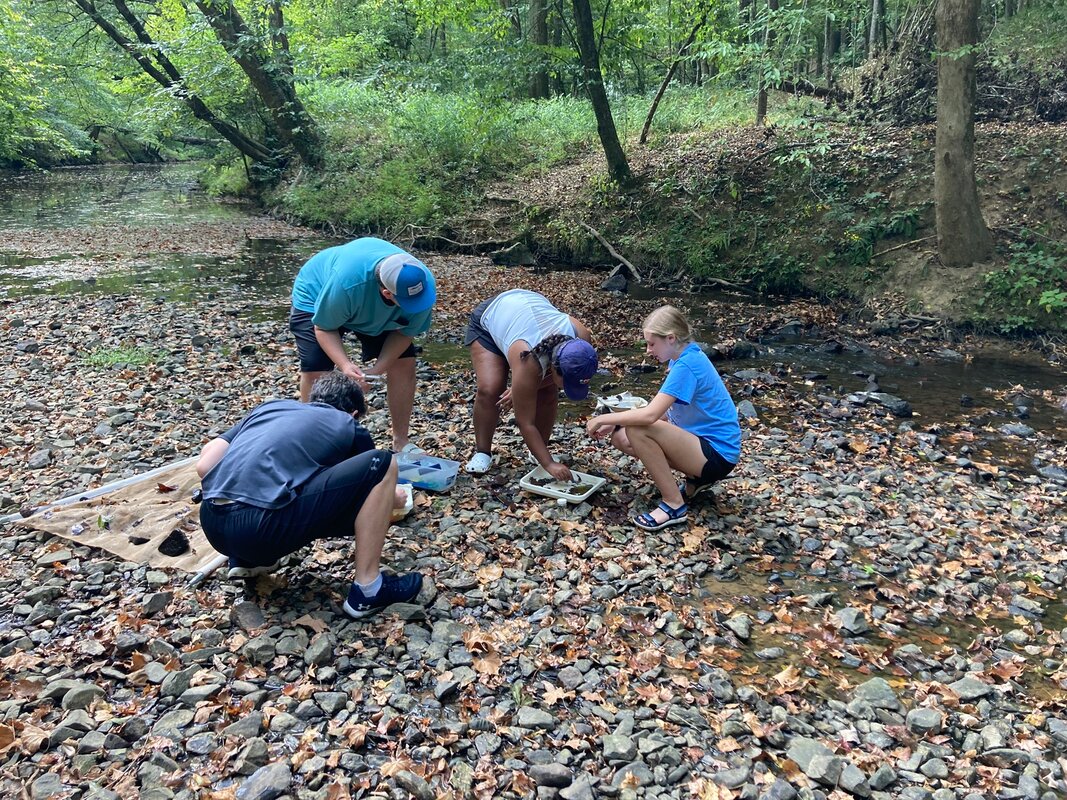
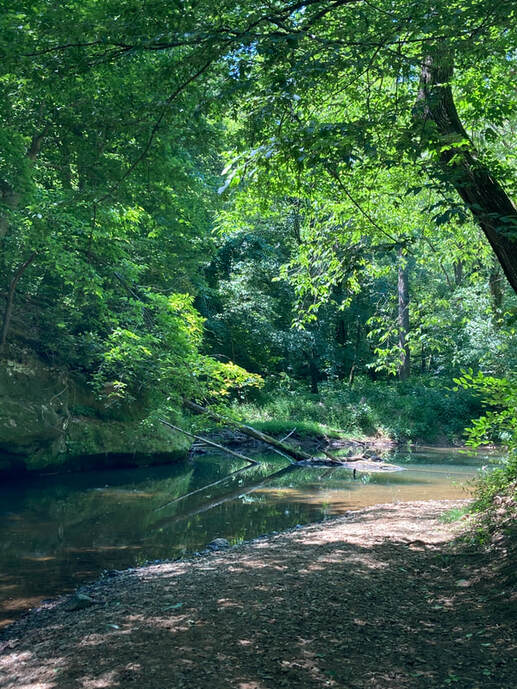
Life in streams, and on the planet in general, is predominantly supported by biomass that is fixed from the atmosphere via photosynthesis, and subsequently respired using oxygen. In the main channels of streams and rivers, these biomass pathways are facilitated by sunlight availability and mixing between waters and atmosphere. However, emerging evidence suggests that these are not the only pathways which support stream life. Alternative biomass pathways can be difficult to detect, and thus termed ‘cryptic’, but are important to understand because they provide food to consumers such as insects and fish, even where light and oxygen are not present. These food sources likely develop in dark, slow-moving, or finer habitats of streams, such as those between gravels and leaves, in backwater habitats, or in the subsurface waters that contribute to surface water. More variation in food resources can facilitate animal survival even in unpredicted environmental conditions. At this point, the importance of these biomass pathways is poorly understood, limiting stream science and management to assumptions that food source production occurs only in main channel conditions. This project will investigate how heterogeneity across stream landscapes supports varying water chemical conditions and biomass pathways, then estimate how these pathways contribute to the growth of insect consumers that are the base of food webs supporting fish.
First, this project will quantify chemosynthetic primary productivity and contributions to stream animal biomass across a range of stream habitat types. By measuring rates of chemoautotrophy, methanotrophy, and photosynthetic primary production across varying biogeochemical conditions and hydrologic gradients, it will be possible to assess the relative contribution of chemosynthesis to biomass fixation. Stable isotope mixing models will be used to estimate contributions of each biomass fixation pathway to consumer (animal) biomass. This suite of results will be synthesized to compare variation in food resource usage across habitats in floodplain environments to assess the role of landscape heterogeneity. Second, this project will develop media, educational materials, courses, and training programs which explain project results in the context of interconnected hydrology, biogeochemistry, and ecology. Classes will be developed for in-classroom and field teaching at UNC Chapel Hill and Flathead Lake Biological Station, in conjunction with mentorship of a graduate student and undergraduates. Two short public-access documentaries will explain how landscape structure can contribute to ecosystem services in rivers and correspond to in-person exhibits. The combined research and teaching objectives will enhance communication between research communities and local stakeholders of the northwestern U.S., and students from urban and rural communities.
Position Description
The PhD student will have an ecosystem ecology focus. They will:
Required Qualifications
Preferred Qualifications
Position Support
Life in streams, and on the planet in general, is predominantly supported by biomass that is fixed from the atmosphere via photosynthesis, and subsequently respired using oxygen. In the main channels of streams and rivers, these biomass pathways are facilitated by sunlight availability and mixing between waters and atmosphere. However, emerging evidence suggests that these are not the only pathways which support stream life. Alternative biomass pathways can be difficult to detect, and thus termed ‘cryptic’, but are important to understand because they provide food to consumers such as insects and fish, even where light and oxygen are not present. These food sources likely develop in dark, slow-moving, or finer habitats of streams, such as those between gravels and leaves, in backwater habitats, or in the subsurface waters that contribute to surface water. More variation in food resources can facilitate animal survival even in unpredicted environmental conditions. At this point, the importance of these biomass pathways is poorly understood, limiting stream science and management to assumptions that food source production occurs only in main channel conditions. This project will investigate how heterogeneity across stream landscapes supports varying water chemical conditions and biomass pathways, then estimate how these pathways contribute to the growth of insect consumers that are the base of food webs supporting fish.
First, this project will quantify chemosynthetic primary productivity and contributions to stream animal biomass across a range of stream habitat types. By measuring rates of chemoautotrophy, methanotrophy, and photosynthetic primary production across varying biogeochemical conditions and hydrologic gradients, it will be possible to assess the relative contribution of chemosynthesis to biomass fixation. Stable isotope mixing models will be used to estimate contributions of each biomass fixation pathway to consumer (animal) biomass. This suite of results will be synthesized to compare variation in food resource usage across habitats in floodplain environments to assess the role of landscape heterogeneity. Second, this project will develop media, educational materials, courses, and training programs which explain project results in the context of interconnected hydrology, biogeochemistry, and ecology. Classes will be developed for in-classroom and field teaching at UNC Chapel Hill and Flathead Lake Biological Station, in conjunction with mentorship of a graduate student and undergraduates. Two short public-access documentaries will explain how landscape structure can contribute to ecosystem services in rivers and correspond to in-person exhibits. The combined research and teaching objectives will enhance communication between research communities and local stakeholders of the northwestern U.S., and students from urban and rural communities.
Position Description
The PhD student will have an ecosystem ecology focus. They will:
- lead field and lab based experimental incubations to measure biogeochemical process rates, and will lead estimation of cryptic carbon sources to consumer biomass.
- assist with experimental development, team training, and communication and outreach while at UNC and all other locations.
- spend the majority of their PhD at UNC, but will spend their second year year working from Flathead Lake Biological Station to facilitate year-round data collection, and will take two major trips to Juneau, Alaska during their third year. This affords a valuable opportunity to explore beautiful Rocky Mountain landscapes and connect with scientists and community members at both locations.
- mentor undergraduate students and research assistants learning field methods.
- join a lab culture with an emphasis on mutual support for collective success, and a strong sense of integrity.
Required Qualifications
- A BS degree in a relevant scientific field
- Fundamental coursework in chemistry, biology, and statistics
- Experience using R to analyze data
- Experience collecting and recording data in an organized, reproducible fashion
- Experience writing a scientific journal article (even if not lead author or unpublished)
- Experience in field and lab settings
- Drive and passion for ecology
- Comfort in the outdoors and/or a strong desire to learn
- Ability to work as part of a team and individually
Preferred Qualifications
- A MS degree in a relevant scientific field
- At least one lead-author publication
Position Support
- The position includes a substantial annual stipend for 4 years, including summer and semester salaries (value will be shared with applicants). If the PhD requires an additional year, TA and summer support could be available.
- Over this four year period, the student will be expected to TA standard departmental courses for 3 semesters total (one semester in each of years 1,3, and 4). The remaining semesters will require a mix of TA and RA.
- Additional internal and external fellowship applications will be supported.
- The student will interact with scientists across UNC Geography, EMES, and E3P programs, Duke, NCSU, EPA, FLBS, and U. Alaska Southeast.
We also constantly offer opportunities for undergraduate research in the lab and field - just send a message if you are looking for a position, and even if we can't accommodate you this semester, we can keep you in mind for opportunities.
I am also glad to discuss mentorship on graduate or postdoc funding applications.
Please check back for additional opportunities.

I am also glad to discuss mentorship on graduate or postdoc funding applications.
Please check back for additional opportunities.